
What Is an Air-to-Water Heat Pump? How It Works & Common Applications
Heat pumps have become one of the fastest-growing home heating technologies as more homeowners seek to improve energy efficiency, reduce fuel consumption, and lower carbon emissions. They offer an energy-efficient way to heat homes by transferring heat instead of generating it through combustion. While many homeowners are familiar with ductless mini-splits or traditional forced air heat pumps, homes with boilers may benefit most from another technology: the air-to-water heat pump.
If you’ve been researching ways to improve your home’s energy efficiency or reduce heating costs, you may have come across the term “air-to-water heat pump.” Unlike more familiar air-to-air systems, these heat pumps work with water-based, or hydronic, heating systems to provide comfortable, consistent warmth throughout the home. They can also integrate with existing boilers, making them an attractive option for homeowners who want to improve efficiency without completely replacing their heating system.
In this guide, we’ll explain what an air-to-water heat pump is, how it works, where it can be used, and why it’s becoming an increasingly popular choice for homes with hydronic heating.
What Is an Air-to-Water Heat Pump?
An air-to-water heat pump is a type of air-source heat pump that captures thermal energy from outdoor air and transfers it into water. That heated water is then circulated through your home’s existing hydronic heating system to provide space heating and, in many cases, domestic hot water. Like all heat pumps, it moves existing heat rather than creating it, which is why it can be an efficient alternative to conventional heating equipment.
Although air-to-water heat pumps may seem like a new technology, heat pumps have been used around the world for decades. Millions of homes rely on them every day because they provide dependable comfort while using energy efficiently. Today’s systems have continued to evolve, offering improved performance, quieter operation, and better cold-weather capabilities than earlier generations.
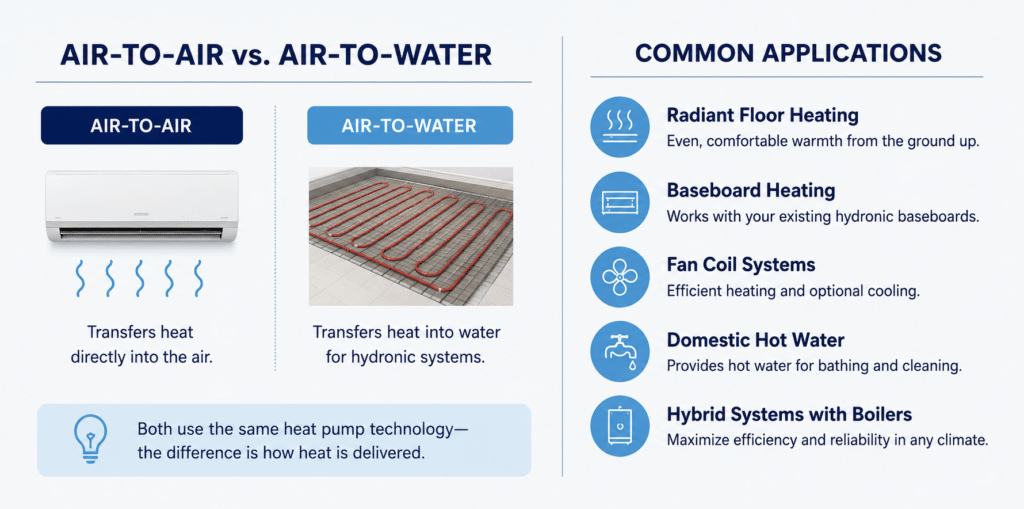
While air-to-water heat pumps might seem confusing, many homeowners are already familiar with mini-splits. Mini-splits and air-to-water heat pumps use the same basic heat pump technology. The difference is how they deliver heat.
A mini-split, a type of air-to-air heat pump, transfers heat directly into the air inside your home. An air-to-water heat pump transfers that same heat into water, allowing it to work with radiant floor heating, baseboard systems, fan coils, or other hydronic applications. For homeowners who already have water-based heating, this makes air-to-water technology a natural fit.
Understanding the Different Types of Heat Pumps
Not all heat pumps distribute heat the same way. Understanding the different types can help homeowners determine which solution best fits their home and heating system.
Air-to-air heat pumps are the most common type found in North America. These systems transfer heat directly into indoor air that is then distributed through ductwork or directly into the room if using ductless mini-split systems. Many also provide air conditioning during warmer months.
Air-to-water heat pumps transfer heat into water instead of air. That heated water can then circulate through hydronic heating systems such as radiant floors, radiators, baseboards, or fan coils. Many systems can also contribute to domestic hot water production and produce chilled water that can be used for cooling.
Ground-source (geothermal) heat pumps extract heat using tubing buried underground rather than from the outdoor air. While they are less sensitive to low outdoor temperatures, they require extensive excavation and have higher installation costs than air-source systems.
Each technology has its advantages depending on the home, climate, and existing heating infrastructure. For homes with hydronic heating, an air-to-water heat pump offers an efficient way to modernize an existing system while maintaining the consistent comfort inherent to hot water heating.
How Does an Air-to-Water Heat Pump Work?
Despite the advanced technology inside the equipment, the basic concept is relatively simple.
The outdoor unit pulls air through a heat exchanger containing refrigerant. Even when temperatures are cold, outdoor air still contains thermal energy that can be captured. The refrigerant absorbs that heat, and a compressor squeezes the refrigerant raising its temperature. The refrigerant is then pumped inside where the energy is transferred to the heating water through a second heat exchanger located in the indoor unit.
That heated water is then circulated through the home’s hydronic heating system to provide comfortable indoor temperatures.
Because the system transfers heat rather than generating it through combustion, it can deliver several units of heat for every unit of electricity it consumes. Actual efficiency depends on factors such as outdoor temperature, system design, and water supply temperatures, but the underlying principle remains the same: moving heat requires significantly less energy than creating it from scratch.
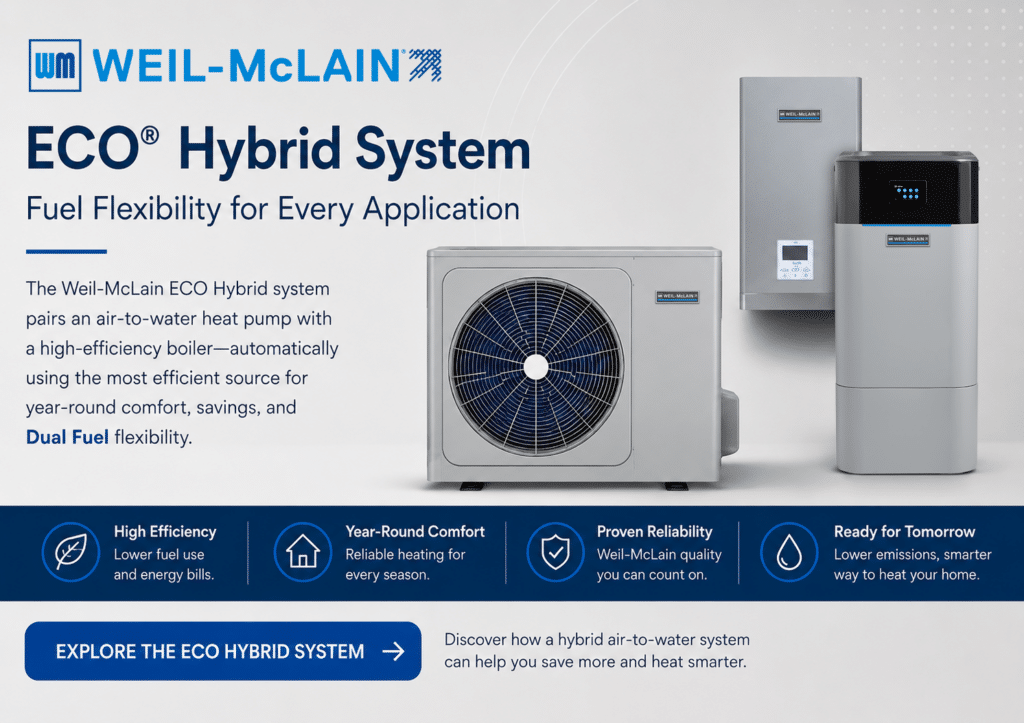
Modern cold-climate air-to-water heat pumps are also designed to continue operating during freezing temperatures, making them suitable for many northern regions. Depending on the application, some homeowners choose to pair the heat pump with a high-efficiency boiler in a hybrid dual-fuel system, allowing each heat source to operate when it performs best.
Where Are Air-to-Water Heat Pumps Used?
One of the biggest advantages of air-to-water heat pumps is their flexibility. Because they work with water rather than forced air, they can serve a variety of heating applications throughout the home.
Radiant Floor Heating
Radiant floor systems circulate warm water through tubing beneath the floor, providing even, consistent heat from the ground up. Because radiant floors operate at relatively low water temperatures, they pair exceptionally well with air-to-water heat pumps.
Baseboard Heating
Many homes already use hydronic baseboard heating supplied by a boiler. Depending on the home’s design and heating requirements, an air-to-water heat pump may be able to integrate with these existing systems, helping improve efficiency while maintaining familiar comfort.
Fan Coil Systems
Fan coils use heated water flowing through a coil while a fan distributes conditioned air throughout the room. These systems offer flexible installation options and, in some configurations, can also support cooling.
Domestic Hot Water
Many air-to-water heat pumps can also contribute to domestic hot water production, helping supply hot water for showers, sinks, and appliances. System capabilities vary depending on equipment selection and overall design, and homeowners should consult a qualified contractor to determine the best configuration for their needs.
Hybrid Heating Systems
For many homeowners, especially those in colder climates, pairing an air-to-water heat pump with a high-efficiency boiler provides the best of both technologies. Throughout most of the heating season, the air-to-water heat pump serves as the home’s primary heating source, while a high-efficiency boiler automatically supplements the system during periods of extreme cold or increased heating demand. As temperatures drop and heating loads increase, the boiler can automatically provide supplemental heat when it becomes the more practical choice.
This hybrid approach improves comfort, reduces fuel consumption, and provides reliable performance throughout the heating season.
Can Air-to-Water Heat Pumps Provide Cooling?
Most air-to-water heat pumps can also provide cooling, but the answer depends on the system design and the type of heat distribution used in the home.
Unlike air-to-air heat pumps, which blow conditioned air directly into living spaces, air-to-water systems circulate chilled water. To deliver cooling effectively, the home typically needs compatible equipment such as fan coil units or specially designed radiant cooling systems. Standard hydronic baseboard systems generally are not designed to provide cooling.
Because cooling performance depends on the home’s existing infrastructure, not every installation includes this capability. Homeowners interested in year-round heating and cooling should discuss available options with their contractor during system design.
Are Air-to-Water Heat Pumps Right for Every Home?
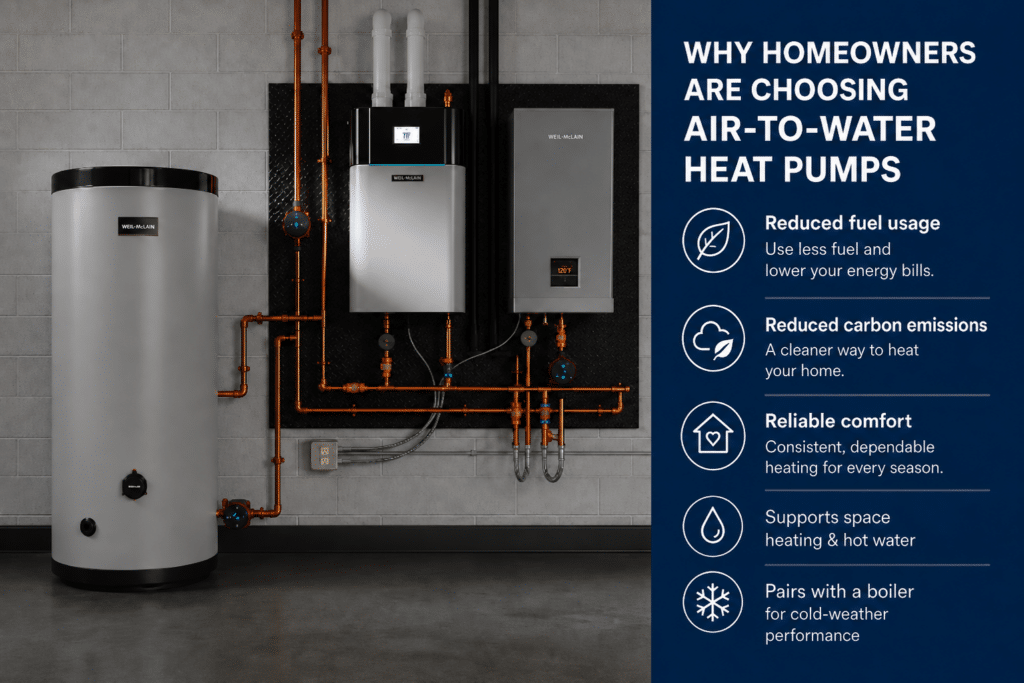
Air-to-water heat pumps can be an excellent solution, but the right system depends on your home’s heating needs, existing equipment, climate, and comfort goals.
Homes that already use hydronic heating systems often have a natural advantage because much of the distribution infrastructure is already in place. Homeowners looking to reduce fuel consumption while maintaining the comfort of radiant floors, baseboards, or other water-based heating systems may find an air-to-water heat pump to be an attractive option.
For homeowners in colder climates, a hybrid system that combines an air-to-water heat pump with a high-efficiency boiler can offer an ideal balance of efficiency, reliability, and year-round comfort. Working with an experienced contractor is the best way to determine which solution is right for your home and how an air-to-water heat pump could fit into your long-term heating plans.
-
Save Up to $1,200 with the ECO Hybrid Smarter Heating Rebate
Homeowners looking to upgrade to a more energy-efficient heating system now have even more reason…
-

ECO® Hybrid System Named #1 Product of the Year by Plumbing & Mechanical
The ECO® Hybrid System from Weil‑McLain has been recognized as the #1 Product of the…
-
Natural Gas to Propane Boiler Conversion: What Contractors Need to Know
Why Fuel Type Matters in Boiler Combustion Weil-McLain boilers are designed to operate with specific…